My Car Broke Down: A Step-by-Step Guide to Staying Safe and Getting Help
It happens to the best of us. You’re driving down the highway, running an errand, or heading home from work when your car breaks down without warning. One moment everything seems fine, and the next you’re stuck on the side of the road, wondering what to do next.
A vehicle breakdown can feel overwhelming, especially if it happens at night, in bad weather, or in an unfamiliar area. But staying calm and knowing what steps to take makes all the difference. This step-by-step guide will walk you through everything you need to do, from the moment your car broken down to getting back on the road safely.
Whether you’re a new driver or a seasoned one, having a plan for car trouble is essential for every Canadian driver. And if you want to make a breakdown far less stressful, becoming a CDRA member is one of the smartest moves you can make.
What Is the meaning of “Car Broke Down”?
“Car broke down” is a common phrase used when a vehicle suddenly stops functioning due to a mechanical or electrical failure, making it unsafe or impossible to drive. It’s a phrasal verb that covers situations ranging from a dead battery and flat tire to a failed engine or overheating.
A broken-down car can happen due to various causes, including ignored maintenance, worn-out parts, extreme weather conditions, or simply bad luck. The good news is that most breakdowns are manageable if you know what to do.
What to Do If Your Car Broke Down
So your car broke down while driving. Here is what you need to do, in order:
Step 1: Turn On Your Hazard Lights Immediately
When your car breaks down, the first step is to turn on your hazard lights to alert other drivers of your situation. This is critical to preventing accidents, especially on a busy highway or in low-visibility conditions like rain or night driving. Flashing hazard lights warn other motorists to slow down and steer clear of your broken-down car.
Step 2: Pull Over to a Safe Location
If possible, pull over to the shoulder or a safe location away from traffic to avoid accidents. Steer toward the right shoulder and get as far off the road as you can. Avoid stopping near curves or hills where other drivers may not see you in time. If you are on a highway, try to exit before stopping.
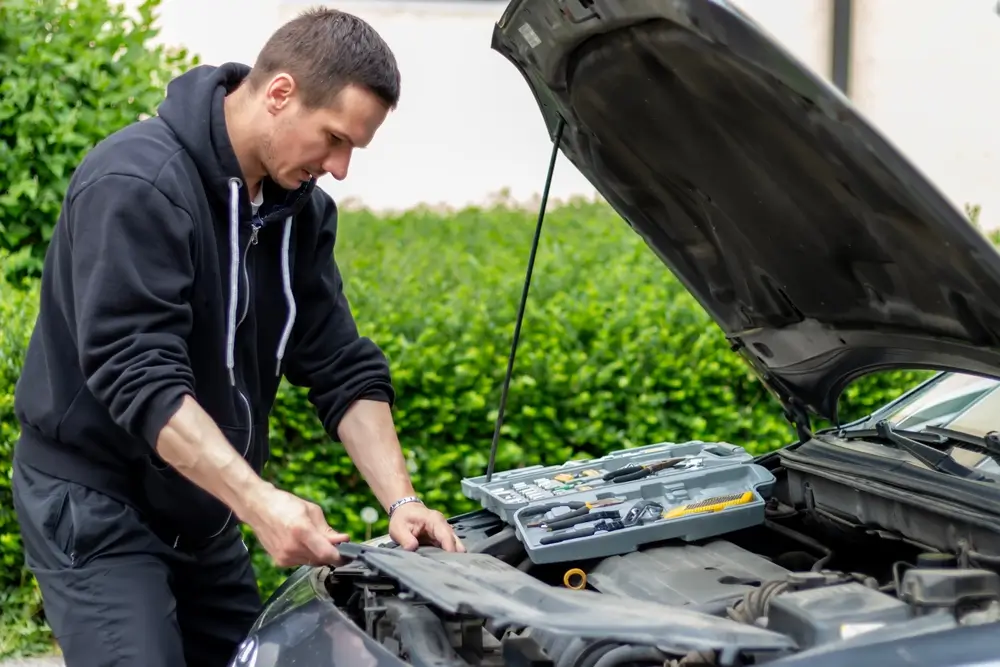
Once stopped, apply the parking brake to prevent the vehicle from rolling. Raise the hood of the car as a universal signal for assistance so that passersby and emergency services know you need help.
Step 3: Stay Calm and Assess Your Safety
Stay calm. Panic makes it harder to think clearly and act safely. Once you have pulled over, take a breath and assess the situation around you.
Consider the following:
- It is often safer to remain inside the vehicle with your seatbelt fastened on busy highways or in extreme weather.
- If necessary, exit the vehicle through the passenger side and wait away from the road, far from oncoming traffic.
- Avoid attempting repairs on busy highways due to safety risks.
- Contact emergency services if you are in a dangerous location or if there is a risk of collision. If in immediate danger or blocking traffic, call 911 or local emergency services.
Step 4: Call for Help
Once you are safe, contact roadside assistance or a tow truck for help. If you have a roadside assistance membership like CDRA, this step becomes quick and stress-free. A quick call connects you to trained professionals who can send help directly to your location, no matter where you are in Canada.
When calling for roadside assistance, it’s important to provide details such as your location, vehicle model, and the nature of the breakdown to ensure timely help. Use highway signs, exit numbers, or nearby landmarks to describe where you are.
If you are not a member of a roadside assistance plan, you can call a local towing service, your insurance company (many offer emergency roadside coverage as an add-on), or a trusted family member or friend.
Don’t wait until you’re stranded to think about coverage. Join CDRA today and get reliable roadside assistance across Canada. Become a Member
Become a MemberCar Broke Down on the Road at Night: What You Should Know
A car breaking down at night adds an extra layer of risk because visibility is reduced. Other drivers may not notice a broken-down car on the highway until it’s too late. If your car broke down at night, here’s what to do differently:
- Turn on interior dome lights: This makes your vehicle more visible to other drivers from a distance.
- Use emergency flares or reflective warning triangles: Place them behind your vehicle to alert other motorists of your presence, especially in low-visibility conditions.
- Stay in your vehicle: Stay in your vehicle with your seatbelt on while you wait for help to arrive, keeping the doors locked for security.
- Keep your phone charged: A portable phone charger is important to have in your car to ensure you can call for help if your phone battery dies during a breakdown.
My Car Broke Down. Who Do I Call?
This is one of the most common questions drivers ask when stranded on the road. The answer depends on your situation, but here’s a clear breakdown of who to call when your car breaks down on the highway or any road:
- CDRA Roadside Assistance: If you are a CDRA member, call CDRA first. Roadside assistance services can provide help such as towing, fuel delivery, and tire changes when a vehicle breaks down. It’s the fastest, most reliable option.
- 911 / Emergency Services: Call immediately if you are in a dangerous spot, in heavy traffic, or if the car is disabled in a live lane.
- Your Insurance Company: In Canada, many drivers opt for roadside assistance plans that can be purchased through insurance companies or independent providers. Check your policy to see if emergency roadside coverage is included.
- A Local Towing Company: If you are not a member of any plan, search for a reputable local tow truck service in your area.
- A Family Member or Friend: If you are in a safe location and the issue is minor, such as a dead battery that needs a jump start, a family member with jumper cables may be all you need.
Car Broken Down on Highway: Special Considerations
A car broken down on a highway is especially dangerous because of fast-moving traffic. If this happens to you, here are the most important things to keep in mind:
- Pull as far to the right shoulder as possible, ideally on a straightaway so other drivers can see you.
- Avoid attempting repairs on the highway. Avoid standing near moving traffic at all times.
- If the temperature gauge is high or steam appears from the engine, stop immediately and do not open the radiator cap until the engine is cool.
- If you must exit the vehicle on the highway, always use the passenger side, away from traffic hazards.
- Call CDRA roadside assistance or 911 right away. Do not try to wave down other drivers on a high-speed highway.
What If You Don’t Have Roadside Assistance?
If your car broke down and you don’t have a roadside assistance plan, you’ll quickly realize how costly and stressful getting help can be. Without coverage, you are responsible for paying out of pocket for towing, which can run hundreds of dollars, especially from a remote area or a highway far from the nearest garage.
You may have to wait hours for a tow truck to arrive, all while sitting on the side of the road exposed to weather, traffic, and other risks. In winter conditions across Canada, this can quickly become dangerous.
That’s where CDRA comes in. CDRA provides affordable roadside assistance coverage for Canadian drivers, so that when your car breaks down, you can focus on staying safe, not scrambling to find help or worrying about the bill.
Why Drivers Choose CDRA Roadside Assistance
CDRA (Canada Direct Roadside Assistance) is built for Canadian drivers and Canadian road conditions. From icy winter highways to summer road trips, CDRA has you covered.
Here’s what CDRA members get:
- 24/7 roadside assistance across Canada
- Towing services to the nearest garage or your preferred repair shop
- Flat tire assistance, battery boosts, and lockout services
- Fuel delivery if you run out of gas
- Peace of mind for you and your family
Ready to drive with confidence? Don’t wait for a car breakdown to find out you’re unprotected. Become a CDRA member today and get the roadside assistance coverage you deserve.
Become a MemberItems to Keep in Your Car for a Breakdown
Prevention and preparation go a long way when it comes to vehicle breakdowns. Keeping a well-stocked emergency kit in your car means you’ll be better equipped to handle car trouble safely while you wait for the tow truck to arrive.
Here’s what every Canadian driver should carry:
- First aid kit: A first aid kit is essential to keep in your vehicle, containing items like bandages, antiseptic wipes, and other medical supplies for emergencies.
- Spare tire, car jack, and lug wrench: Keeping a spare tire, along with a car jack and lug wrench, is crucial as many breakdowns occur due to flat tires, and having these basic tools allows for a quick change if needed.
- Jumper cables: Jumper cables are a must-have in your emergency kit, as they can help revive a dead battery, which is a common cause of breakdowns.
- Emergency flares or reflective warning triangles: Emergency flares or reflective warning triangles should be included in your emergency kit to alert other drivers of your presence if your car breaks down, especially in low visibility conditions.
- Portable phone charger: A portable phone charger is important to have in your car to ensure you can call for help if your phone battery dies during a breakdown.
- Flashlight with extra batteries: Invaluable when your car broke down at night or in a poorly lit location.
- Warm blanket and water: Especially important for Canadian winters, when waiting for help in cold temperatures can quickly become a safety issue.
Avoid This Situation Next Time: Preventing Car Breakdowns
While no one can predict every breakdown, routine maintenance is essential for preventing car breakdowns, as it helps identify potential issues before they become serious problems.
Here are a few simple habits that can significantly reduce your risk of a vehicle breakdown:
- Drivers should pay attention to unusual noises and dashboard warning lights, as these can indicate mechanical issues that may lead to a breakdown.
- Keeping at least a quarter tank of gas at all times can help prevent breakdowns due to running out of fuel, which is a common issue for drivers.
- Schedule regular oil changes, tire rotations, and inspections, especially before long drives or seasonal changes.
- Common causes of car breakdowns include dead batteries, fuel system issues, or failed alternators, so have these components checked regularly.
- For older vehicles, be extra vigilant, as wear and tear accumulates and the risk of car trouble increases over time.
My Car Broke Down: Frequently Asked Questions (FAQs)
What is the most common reason a car breaks down?
The most common causes include a dead or faulty battery, flat tires, fuel system problems such as a blocked fuel filter or bad fuel pump, alternator failure, and engine overheating. For older vehicles, worn-out belts and hoses are also frequent culprits. Regular maintenance can help you catch most of these issues before they leave you stranded.
Does car insurance cover a broken-down car?
Standard car insurance plans that include liability and accident benefits do not typically cover a broken-down car due to mechanical failure or general wear and tear. However, if your car broke down as a result of a collision, your policy may provide some coverage. Roadside assistance is generally a separate add-on or standalone plan. CDRA offers dedicated roadside assistance coverage so you’re protected regardless of how or where your car breaks down.
Who do I call when my car breaks down on the highway?
If you are a CDRA member and your car has broken down on the highway, call CDRA first for fast, professional assistance. If you are in immediate danger or blocking moving traffic, call 911 right away. Otherwise, you can contact your insurance company if they include emergency roadside services, or search for a local towing company in your area.
What if my car broke down in the middle of nowhere?
Stay calm and call for help. Contact a roadside assistance service like CDRA or use a mobile phone or a roadside emergency phone if available. Make sure you clearly and accurately describe your location so the recovery service can find you. Keep your hazard lights on, stay in your vehicle, and use any safety equipment you have, including reflective triangles or flares, to stay visible.
What does it mean if your car broke down?
It means your vehicle has stopped working due to a mechanical or electrical failure and can no longer be driven safely. Common causes include a dead battery, a flat tire, overheating, or engine failure. If your car broke down, turn on your hazard lights, pull over safely, and call CDRA for roadside assistance.
How much does it cost if your car breaks down?
Costs vary depending on the issue. Without roadside assistance coverage, expect to pay:
- Towing: $75 to $200+
- Battery replacement: $150 to $300
- Flat tire / new tire: $100 to $400
- Alternator: $400 to $900
- Engine or transmission repairs: $500 to $5,000+
A CDRA membership covers towing, battery boosts, flat tires, and more, so you avoid paying out of pocket.
Is breakdown cover cheaper with car insurance?
Not always. Most standard car insurance policies in Canada do not include breakdown cover by default. Adding it as an optional extra through your insurer can be convenient, but a dedicated roadside assistance plan like CDRA is often a better value and does not affect your insurance premiums when you use it.
What is the best breakdown service for cars?
The best service is available 24/7, covers your area (including highways and remote roads), and handles the most common emergencies: towing, flat tires, battery boosts, fuel delivery, and lockouts. For Canadian drivers, CDRA offers all of this with transparent pricing and coast-to-coast coverage.
Why did my car break down while I was driving?
The most likely causes are:
- Electrical failure: faulty alternator or dead battery, cutting power mid-drive
- Fuel system issue: blocked fuel filter or failing fuel pump
- Overheating: coolant leak or failing water pump
- Spark issue: worn spark plugs or a faulty ignition coil
- Timing belt failure: snapped belt shuts the engine down instantly
If it happens, pull over safely, turn on your hazard lights, and call for help.
How to tell if an engine is blown while driving?
Key warning signs include:
- Loud knocking or banging from the engine block
- Sudden loss of power or the engine cutting out entirely
- White or blue smoke from the exhaust
- Oil pressure warning light coming on
- Engine seizing up completely
If you notice any of these, pull over immediately and do not restart the engine. Have the vehicle towed.
What to do if a car breaks down on a drive?
- Turn on hazard lights immediately
- Pull over to the right shoulder or a safe location
- Apply the parking brake
- Stay in your vehicle on busy roads; exit via the passenger side if needed
- Place reflective triangles or flares if available
- Call CDRA with your location and vehicle details
How does a car act when the transmission is going out?
Common signs include:
- Slipping gears or unexpected gear changes
- Rough, delayed, or jerky shifting
- Whining or clunking noises when in gear
- A burning smell from overheated transmission fluid
- Transmission warning light on the dashboard
- Fluid leaks (red or brown puddle under the car)
Get the vehicle inspected early. Transmission repairs are expensive if left too long.
What are the top 5 signs of engine trouble?
- Check engine light on the dashboard
- Unusual noises (knocking, ticking, hissing)
- Loss of power or sluggish acceleration
- Excessive smoke from the exhaust pipe
Do not ignore these signs. A quick diagnostic check can prevent a full breakdown.
What is the first indication of engine failure?
Usually, the check engine light. Beyond that, early warning signs include unusual engine noises (ticking or knocking), rough idling, a sudden drop in fuel economy, and difficulty starting. Catching these early and getting a diagnostic check can prevent a complete breakdown.
What are the signs of a failing head gasket?
- White smoke from the exhaust
- Engine overheating or coolant loss with no visible leak
- Milky, frothy oil (coolant mixing with engine oil)
- Bubbling in the coolant reservoir
- Noticeable loss of engine power
Head gasket repairs typically cost $1,000 to $2,500+. Have the vehicle inspected immediately if you spot these signs.
How do I know if I ruined my engine?
Signs of serious engine damage include:
- The engine will not start or make a grinding metal-on-metal sound
- Deep, rhythmic knocking from inside the engine block
- Engine seized (will not rotate at all)
- Rapid oil or coolant loss
- Metal shavings found in the oil
If you suspect engine damage, do not attempt to drive. Call CDRA for a tow and get a full diagnostic from a qualified mechanic before making any repair decisions.
What is the best time to buy a breakdown cover?
The best time to buy a breakdown cover is before you need it by 24 hours at least. It takes 24 hours before you can claim it.
Car Broke Down: Summary
A car breakdown is stressful, but it doesn’t have to be dangerous or disastrous. By staying calm, turning on your hazard lights, pulling to a safe location, and calling for the right help, you can get through the experience safely.
The key takeaways from this guide are: always be prepared with an emergency kit, know who to call before you ever need to make that call, and make sure you have reliable roadside assistance coverage for every drive.
For Canadian drivers, CDRA is that reliable partner on the road. Whether it’s a flat tire on a rural highway, a dead battery in a parking lot, or an engine failure in the middle of a snowstorm, CDRA is there to help you get back on the road quickly and safely.
Don’t wait for a breakdown to discover you need help. Become a CDRA member today and drive with confidence knowing that help is just one call away.
Become a Member