
Stranded with a Dead Car Battery? Here’s What to Do Next
Car batteries always seem to die at the worst time, and if you’re here, you’re probably stuck with a car that won’t start or trying to figure out what went wrong before it happens again. Either way, don’t worry, a dead car battery is definitely annoying, but it’s not as bad as it seems. A dead battery is one of the most common car problems out there, and with a few simple steps, you can be back on the road in no time.
In this article, we’ll explain in detail what you should do if your car battery is dead, why it happens, and how to avoid it in the future.
What Does a Dead Battery Mean for Your Car?
A dead car battery is one that doesn’t have enough power to start the engine or operate your vehicle’s electrical systems. This can happen due to several reasons, including age, extreme temperatures, or leaving lights and other accessories on when the engine isn’t running.
Don’t wait till you’re stuck with a dead battery in the middle of nowhere; subscribe to our membership program today and enjoy 24/7 roadside assistance whenever you need it. From emergency battery boosts and fuel delivery to towing and car locksmith services, we offer the best roadside assistance in Canada at competitive rates.
Become a Member9 Warning Signs of a Bad or Dead Car Battery
What Are the Most Common Bad Car Battery Symptoms You Shouldn’t Ignore?
Although having your battery die in your car might seem sudden and totally out of the blue, there are some telltale signs of a bad battery that start to appear long before it completely dies. Paying attention to these signs can help you determine when to replace your battery before you end up with a dead battery in your car.
Some of the common bad battery symptoms are:
- Bloated Battery Case: You should check your car battery now and then for any signs of swelling or bulging. A bloated car battery case means that it has overheated or experienced internal damage, which affects its ability to hold a charge, causing it to drain quickly or completely fail.
- Corrosion on Battery Terminals: If you see white or blue-green ashy buildup around the battery terminals, it’s a sign of corrosion. If you don’t clean this buildup, it can block the flow of electricity between your battery and your vehicle, making it harder to start the engine. It also affects your battery life and can lead to more electrical issues over time.
- Bad Smell: A rotten egg or sulfuric acid smell coming from your car battery means that your battery acid is leaking and the internal cells are likely damaged. If you notice this smell, you should consider a battery replacement right away to avoid further damage.
- Frequent Jump Starts Needed: If your battery keeps dying on you, and you need jump starters to get your car running, it’s one of the very common low-car battery symptoms. Although a jump start is good for emergencies, relying on it too often can strain your battery and even damage your car’s electrical components.
What Are the Signs of a Dead Car Battery?
The most obvious sign of a dead battery is the engine not starting when you turn the key. However, other warning indicators can help you determine if your car battery is low. Some of the signs your car battery is dying are:
- Slow Engine Crank: Your car engine takes longer to start or struggles to turn over.
- Dim or Flickering Lights: If your headlights or interior lights appear weaker than usual, it can be because of dying light bulbs or fuses, but it can also be a sign of a bad car battery.
- Rapid Clicking Sound: Hearing a rapid clicking noise when you turn the key usually means the battery doesn’t have enough power to start the engine.
- Electrical Malfunctions: If your car battery is dying, it won’t provide enough voltage to keep all electrical components running smoothly, including the radio, power windows, and door locks.
- Battery Warning Light: Before your battery dies, you’ll see a red or yellow light appear on your dashboard.
Read More:
How to Fix a Dead Car Battery?
Here’s what to do if your car battery is dead:
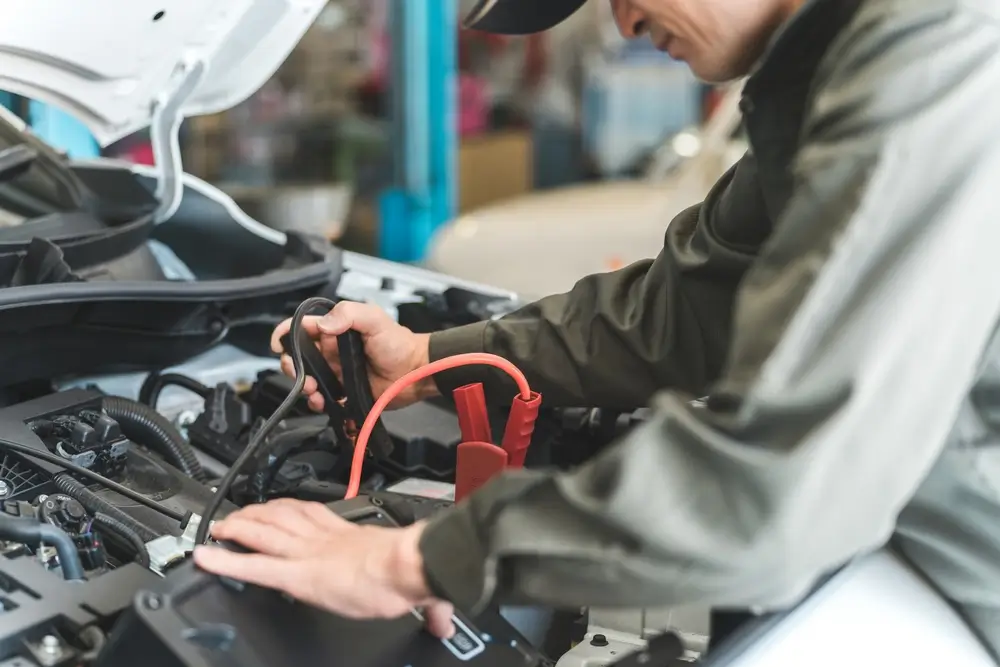
- Jump Start Your Car: Most car batteries die in cold temperatures and need an extra boost to get going. Use a set of jumper cables and a working vehicle to jump-start your car by connecting the positive cable to the positive terminal on both batteries and the negative cable to the negative terminal. Let the working vehicle run for a few minutes, then start your car.
- Use a Portable Jump Starter: Purchasing a portable jump starter is a smart investment, especially in colder climates, where car battery problems are more common. This device allows you to jump-start your vehicle without needing another one, which is useful in remote areas or where help isn’t immediately available. After a jump-start, always let your battery recharge by keeping the engine running for at least 15-30 minutes or take a short drive to allow the alternator to sufficiently charge your battery.
- Clean Corrosion: Corrosion on your battery terminals can cause significant damage to your car’s electrical system and reduce the battery’s ability to hold a charge. If you notice white or blue-green buildup around the terminals, disconnect the battery and clean the area with a paste of baking soda and water using a wire or plastic brush. Make sure to wear gloves and eye protection while cleaning, as battery acid is harmful if it comes into contact with your skin.
- Tighten Loose Connections: Check for loosely connected battery cables, as they can interrupt the flow of electricity and prevent your car from starting. Even with a good battery, your charging system won’t work properly if the connections are loose. Make sure the terminals are clean and tightly secured to ensure steady power flow throughout your vehicle.
- Call Our Canada Direct Roadside Assistance: Whether your car battery died in a rural area or right in your own driveway, our team is ready to help. Our team goes the extra mile for you by arriving quickly, assessing the issue on the spot, and getting your car started safely. Become a member today and start enjoying our services.
Read More:
What Happens When a Car Battery is Completely Dead?
If your car battery is completely dead, your car won’t start, and the ignition won’t respond when you turn the key. That’s because your battery no longer has enough energy to power essential components starter motor, lights, or dashboard electronics. In some cases, you might hear a clicking sound, but the car won’t start because there’s no energy left.
How to Charge a Dead Car Battery?
If your car battery is dead, follow these steps from our experts to charge it:
- Make sure your engine and the rest of your electronics are turned off.
- Locate your car battery, and if you don’t know where it is, check the owner’s manual.
- Connect the charger by attaching the red to the positive and the black to the negative.
- Choose the right voltage and begin charging.
- Wait and let it charge fully; it can take a few hours.
- Once charged, unplug the charger and remove the clamps: negative first, then positive.
- Try starting your car; if it doesn’t start, it can mean that your old battery is completely dead and can’t be charged, or there’s something wrong with the alternator. Either way, it’s time to take your car for a professional inspection.
How to Test a Car Battery and Know When It’s Time to Replace It
You can either have your battery tested at home using a multimeter or visit a professional service center. Follow these steps if you want to test your battery yourself:
- Turn Off the Engine: Make sure your car and all electronics are off.
- Set Up the Multimeter: Adjust it to measure DC voltage.
- Connect the Probes: Attach the red probe to the positive terminal and the black probe to the other end.
- Read the Voltage: A fully charged battery should show around 12.6 volts or higher. Meanwhile, a weak battery would read anything below 12.4, and if the reading is around 12, you need to replace your battery as soon as you can.
How to Replace a Dead Car Battery
Replacing a car battery is a simple process if you follow the right steps. Always remember, safety first; wear gloves and eye goggles before handling the battery.
- When purchasing a battery, ensure it matches the vehicle’s required cold cranking amps (CCA).
- Make sure to turn off the engine and remove the keys.
- Disconnect the cables by removing the negative terminal first, followed by the positive terminal. Never disconnect them in reverse order.
- Remove the old battery carefully and place it on a flat surface.
- Before installing your new battery, clean your car’s terminals with an anti-corrosion solution to ensure a strong and stable connection.
- Install the new battery by placing it securely in the tray and tightening any brackets or clamps.
- Reconnect the cables: positive first, then negative.
- Ensure all the connections are locked in tight before closing your car hood and starting the engine to test the battery.
If you’re wondering what to do with your old car battery, you can take it to an auto parts store or a local recycling center. Since car batteries contain harmful chemicals, it’s important to dispose of them safely to avoid environmental damage.
How to Choose the Right Car Battery for Your Vehicle
Investing in a reliable car battery in Canada is essential to avoid unfortunate breakdowns, especially in cold temperatures that can drain your battery quickly. Here’s what to look for when replacing your dead car battery with a new one:
- Check the Cold Cranking Amps (CCA): Check your car’s owner’s manual to determine the required cold cranking amps. The higher the CCA, the better your car will perform in freezing conditions.
- Find the Right Size and Fit: Ensure the battery matches your vehicle’s size, type, and terminal position.
- Check for Warranty: Select a battery that’s backed by a solid warranty. It might cost a little more upfront, but it provides you with a safety net in case your battery fails earlier than expected.
- Buy from a Trusted Brand: Drivers in Canada have access to a wide range of car battery brands, but not all offer the same quality or reliability. That’s why you should check reviews on the battery and manufacturer before proceeding to buy it.
Can Battery Terminals Affect Car Performance?
Battery terminals can affect your car’s performance and, in some cases, prevent it from starting altogether. When the terminals are corroded, dirty, or loose, the electrical current can’t flow efficiently between the battery and your vehicle’s systems. This can lead to dim headlights, flickering dashboard lights, and accessories not working properly. That’s why you should always keep your terminals clean, tight, and securely connected.
Flat Battery VS Dead Battery: What’s the Real Difference?
Flat Battery
A flat battery has temporarily lost its charge, but can be recharged and used again, either by jump-starting the car or using a battery charger. A flat battery is usually caused by leaving headlights, interior lights, or other accessories on while the engine is off, or by not driving the car for an extended period. Cold weather also affects the battery’s ability to hold a charge, causing it to go flat earlier than expected.
Dead Battery
If your battery went flat and you can’t recharge it again, no matter how many times you try to jump-start it, it most likely means that the battery is completely dead. A dead battery can’t be recharged because it’s lost its ability to store or generate energy due to internal damage. Some common dead battery symptoms include no response at ignition, electrical failure, a swollen battery case, and a battery warning light.
Why Does a Car Battery Die?
There are several reasons a car battery might die, including:
- Age: Most car batteries die due to age. The lifespan of a typical car battery is around three to five years, depending on driving habits, weather conditions, and maintenance. As batteries get older, they lose the ability to hold and generate energy, causing them to die.
- Faulty Charging System: A malfunctioning alternator can prevent the battery from recharging properly, leaving it drained even after long drives.
- Bad Terminals: If your terminals have corrosion build-up or loose connections, your battery won’t be able to perform efficiently. Over time, it can cause voltage drops, difficulty starting your car, and even drain the battery completely.
- Parasitic drain: This happens when you leave lights or electronics on when the engine is turned off. If any of your car accessories don’t shut off automatically when you turn off the engine, they can continue drawing energy from the battery, eventually leading to draining it completely.
- Severe Weather Conditions: Extreme temperatures and weather changes can affect your battery’s performance. Canada’s cold winters make it harder for batteries to deliver enough energy to start your car because temperature drops slow down the chemical reactions inside the battery. You can avoid this by parking your car in a closed garage or a heated space as much as you can.
- Short Trips and Infrequent Use: Driving short distances or not using your car for a long while doesn’t give the alternator enough time to fully recharge the battery. Our experts at CDRA recommend driving your car for at least 30 minutes once a week to allow it to fully recharge.
Read More:
- Car Won’t Start in Cold Weather? Here’s Why & How to Fix It
- If car battery dies in cold will it recharge
- What to Do When You Have a Frozen Car Battery
Should I Replace My Car Battery Before It Dies?
You should aim to replace your car battery before it dies to avoid being stranded unexpectedly. Ideally, you should replace your car battery every 3 to 5 years because its ability to hold and deliver energy decreases over time. Regular battery testing helps you catch early signs of wear and damage, which allows you to determine the time of replacement.
Another thing that can protect you from getting stuck on the road is subscribing to our membership program to get battery boosts whenever you need them. We offer emergency battery boost services 24/7 across Canada:
Can a Battery Die While the Vehicle is Parked?
The main reason why a car battery might die while the vehicle is parked is parasitic drain, meaning that certain electrical components continue using energy even when the engine is off. Devices like interior lights, dashboard cameras, alarms, and other accessories can slowly drain your battery over time. To prevent this, unplug accessories, ensure all the lights are off, and use a trickle charger if you’re not going to drive your car for a long while.
How Long Should You Run Your Car After Recharging a Dead Battery?
After recharging or jump-starting a dead battery, you should run your car for at least 30 minutes to an hour, preferably on a highway, to allow the alternator to sufficiently recharge it. Some people choose to let their car idle in the garage, and even though it’ll help a little, driving is way more effective. If your car still struggles to hold a charge after a long drive, it might be time to have it inspected or replaced.
How Long Does it Take to Charge a Car Battery?
The duration it takes to charge your car battery depends on the charger you’re using and the battery’s current charge level. Assuming the battery is dead, below are some general estimates for how long it may take to recharge it with different chargers:
- Slow Charge (2A): Takes around 24-25 hours for a full charge.
- Medium Charge (10A): Recharges a dead battery in about 5 to 6 hours.
- Fast Charge (20A): Can recharge a dead battery in 2 to 3 hours, but using it too much can shorten battery life.
Dead Car Battery – FAQs
Can a Car Battery Suddenly Die?
Yes, a car battery can suddenly die if it’s already weak or nearing the end of its lifespan. Factors like extreme weather, corroded terminals, or leaving lights and electronics on can quickly drain the battery’s energy.
What does a dead battery sound like?
If your battery is dead or dying, you’ll hear a cranking noise when you turn the key; it’s one of the common weak car battery symptoms.
How long does a car battery last?
Car batteries usually last around 3 to 5 years, depending on driving habits, weather conditions, and maintenance.
Can a dead car battery recharge by itself?
No, if your car battery can’t deliver enough power to turn on the engine, it won’t be able to recharge itself. A car battery recharges through the alternator, which generates energy while the engine is running. If the engine can’t start, the alternator can’t produce the power needed to recharge the battery.
How do I start a car with a dead battery?
The fastest way to start a car with a dead battery is to jump-start it with the help of another vehicle or a portable jump starter pack. You can easily jump-start your car by connecting the red cable to both positive terminals, then the black cable to the negative terminal of the charged battery and a metal surface on your car. Start the working vehicle, wait a few minutes, then start yours and let it run or take it for a drive to recharge.
How long should I leave my car running to charge a dead battery?
After a jump-start, you should drive your car at highway speed for at least 30 minutes to allow the alternator to recharge the battery. You can also let your car idle, but it won’t be as efficient and environmentally friendly as driving.
Does idling a car charge the battery?
Yes, letting your car idle in the garage can charge your battery, but it has other drawbacks. Idling only produces a small amount of energy, so it charges the battery very slowly compared to driving. It also wastes fuel and can cause harmful gas buildup if done in an enclosed space.
Is it better to jump-start or charge a car battery?
Jump-starting and charging your car battery serve different purposes, as a jump-start is a quick, temporary solution that gives your battery enough energy to start the engine. Meanwhile, a battery charger, on the other hand, provides a slower and more complete recharge, restoring the battery’s full capacity.
Can you ruin a car battery by charging it for too long?
Yes, overcharging your car battery can lead to several issues, including damaging the plates and causing the electrolyte fluid to evaporate, which can completely ruin your battery.
Is a 20-minute drive enough to charge a car battery?
Not really, experts recommend driving your car for at least 30 minutes to charge the battery.
What drains a car battery when it’s off?
Leaving accessories like interior lights, headlights, or phone chargers turned on while your engine is off can drain your car battery.
Is $300 too much for a car battery?
Although most standard car batteries cost between $100 and $250, premium options like AGM or EFB batteries, which offer better performance and longer life, can reach $300 or more. So, paying $300 for a car battery is actually a smart investment.
What are the factors that shorten the life of a car battery?
- Extreme temperatures: Heat or cold can weaken battery performance.
- Corrosion: Dirty or corroded terminals reduce power flow.
- Short trips: Frequent short drives prevent full recharging.
- Parasitic drain: Electronics that drain power when the engine is off.
- Old age: Most batteries wear out after 3–5 years.
What brand of car battery lasts longest?
There’s no certain car battery brand that lasts the longest, but generally, premium brands like Optima, Odyssey, Interstate, ACDelco, and DieHard are known for their durability and reliability.
Can you jump-start a completely dead car?
No, a completely dead car can’t be jump-started because it has lost its ability to hold a charge. If your car battery is completely dead, you should have the battery replaced.
How to tell if the issue is with the battery or the alternator?
A bad or dying battery would cause slow engine cranking, dim headlights, or complete power loss when starting the car. If jump-starting fixes the problem but the issue returns later, the battery is likely weak. A failing alternator, on the other hand, causes the battery to drain even while driving. You might notice flickering lights, strange noises, or a battery warning light on your dashboard. If the car stalls shortly after removing jumper cables, the alternator is likely the culprit.
How much does a new car battery cost?
The cost of a new car battery ranges all the way from $100 to $300, depending on the brand, type, and size of your vehicle.
Need Help with a Dead Car Battery?
If you’re stuck on the road with a dead battery, professional help is just a call away.
We offer roadside assistance services across Canada, including: